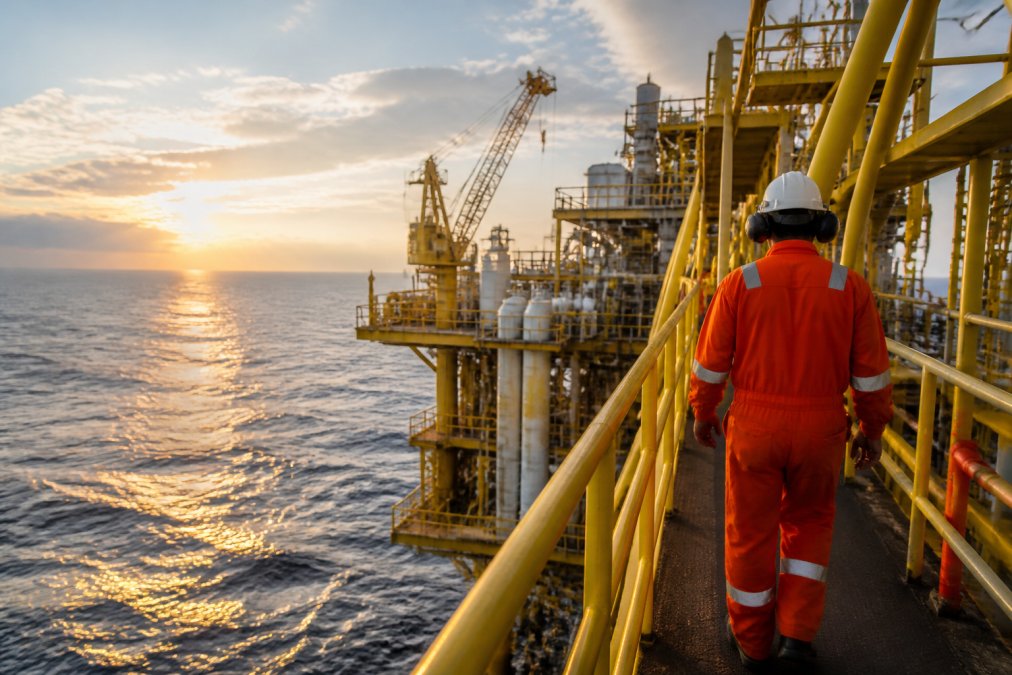
 listicle
Benefits of Working on Offshore Oil Platforms
Table of Contents
- Competitive Salary and Financial Packages
- Offshore Oil Rig Rotation Schedules and Work-Life Balance
- Offshore Survival Training Requirements and Career Progression
- Housing, Meals, and On-Site Accommodation
- Global Travel and Professional Development Opportunities
- Job Security in the Energy Sector
- The Reality of Isolation, Mental Health, and Physical Demands
- Financial Planning, Tax, and Re-Entry After Offshore Work
- Frequently Asked Questions
Last Updated: September 15, 2026
Competitive Salary and Financial Packages
Work on offshore oil platforms pays a premium because you trade comfort and predictability for compensation. This guide from Man Power Contractors UK LTD breaks down what those packages contain and where the trade-offs sit.
A typical compensation package combines a base day rate, an offshore allowance, and often hazard pay for higher-risk roles, plus a travel allowance covering the heliport or port commute (Offshore health and safety law).
Day Rates, Hazard Pay, and Travel Allowances
Day rate is the core of offshore pay: you are paid per day worked, not per hour, so a two-week rotation can produce a substantial lump sum.
- Day rate: the flat daily figure for your role and grade
- Hazard pay: an uplift for higher-risk locations or tasks
- Travel allowance: covers flights, transfers, and sometimes overnight stays before mobilisation
- Rotation bonus: some operators pay extra for longer or unsociable rotations
The catch: day rates are not paid for time at home. Two weeks on, three weeks off means you earn only for platform days. Budget accordingly.
Offshore Oil Rig Rotation Schedules and Work-Life Balance
Offshore oil rig rotation schedules are the backbone of the lifestyle. Common patterns are 2 weeks on / 3 off, 3 on / 3 off, and 2 on / 2 off, though these vary by operator and installation.
A 3-on / 3-off pattern gives you roughly half the year at home, for workers with young families or side projects, that leave is often worth more than the salary.
How Rotational Patterns Affect Daily Life
Rotations shape sleep, relationships, and your ability to take a course or start a business.
- 2/3 rotation: more time at home, but longer stretches away when you are on
- 3/3 rotation: balanced, but a full three weeks away can be hard on families
- 2/2 rotation: easier to sustain long-term, though the leave blocks are shorter
Work-life balance offshore is about annual, not daily, balance: you compress your working year into fewer, more intense blocks, then take extended leave.
Offshore Survival Training Requirements and Career Progression
Offshore survival training requirements are non-negotiable: before stepping on a platform you typically need a valid offshore survival certificate, a medical fitness certificate, and often firefighting and first aid training, all renewed on a fixed cycle (Basic Offshore Safety Induction and Emergency Training (BOSIET) with Emergency Breathing...).
The upside: these specialist certifications are portable, opening doors across operators, contractors, and regions, and forming the foundation of a genuine career path in the oil and gas industry.
Career progression offshore is often faster than onshore: a worker who completes on-the-job training and adds certifications can move from roustabout to roughneck to assistant driller and beyond within a few years.
- Entry roles: roustabout, cleaner, catering
- Technical roles: roughneck, derrickman, assistant driller
- Specialist roles: electrician, mechanic, instrument technician
- Supervisory roles: driller, toolpusher, offshore installation manager
For workers who want to keep progressing, professional development is the lever. Employers often fund additional training for staff who show commitment.
Housing, Meals, and On-Site Accommodation
On-site accommodation is one of the most underrated benefits: no rent, utilities, or food bills while on rotation, so more of the day rate reaches the bank account.
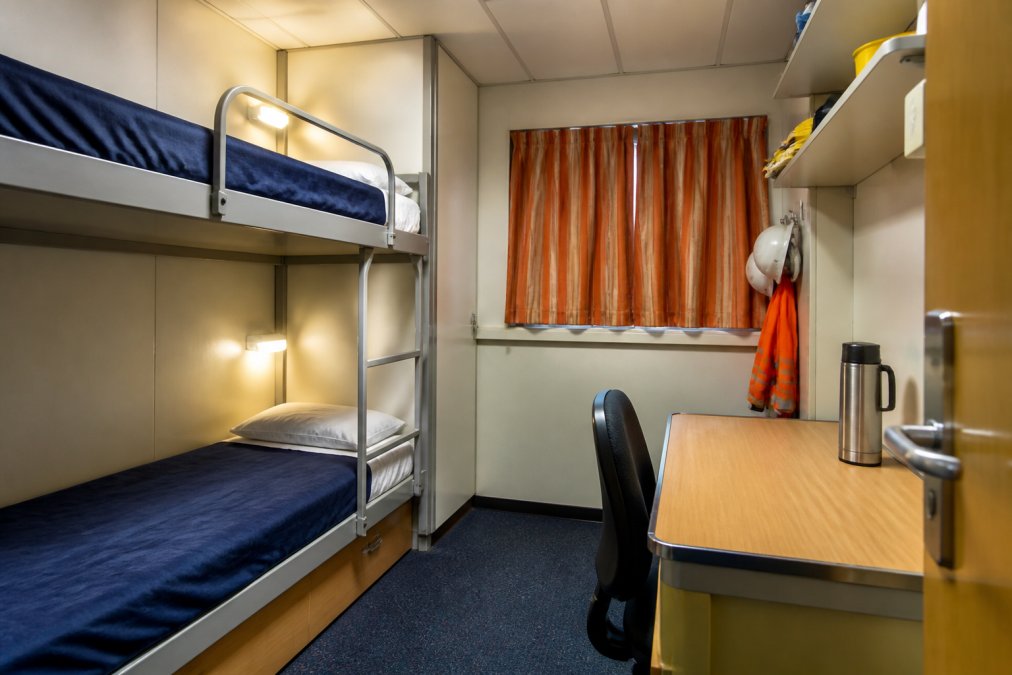
Living quarters typically include a shared or single cabin with a bed, storage, and small desk. Communal areas usually have a gym, TV room, and sometimes a shop or internet café.
Meals are provided three times a day plus night-shift cover, often better than people expect, with dietary requirements catered for on notice.
The trade-off is privacy. Cabins are small, shared, and close to the work area, so noise and shift patterns can affect sleep quality.
Global Travel and Professional Development Opportunities
Work on offshore oil platforms is genuinely global. Platforms operate in the North Sea, the Gulf, West Africa, Southeast Asia, and beyond, and skilled workers with the right certifications can move between regions.
Global mobility is a real benefit: many contractors rotate between installations in different countries, and some operators support relocation.
The marine environment itself is a draw for some: the work is physical, outdoor, and technical, and there is a genuine sense of teamwork on a rig floor that is hard to replicate onshore.
- North Sea: short rotations, high day rates, cold weather
- Middle East: long rotations, tax advantages for some nationalities
- West Africa: rotational roles, often with hardship uplifts
- Asia-Pacific: growing demand, competitive packages
The catch is that travel is not tourism. You see the inside of a heliport and a platform, not the cities nearby.
Job Security in the Energy Sector
Job security in the oil and gas industry is more nuanced than it looks. The sector is cyclical, but offshore roles have a structural advantage: the work is technical, regulated, and hard to automate.
Safety culture has also changed: modern platforms operate under strict industry standards, and workers with valid certifications and clean records stay in demand.
For workers who want to reduce risk, the answer is specialisation. A general labourer is more exposed to a downturn than an instrument technician or a subsea engineer.
The Reality of Isolation, Mental Health, and Physical Demands
Isolation is the honest downside recruitment pages soften: three weeks from family, a shared cabin, no way to walk out, and the same few dozen people produce predictable pressures. Mental health offshore is now treated far more seriously than a decade ago, but the mechanisms matter more than the sentiment.
What Isolation Actually Does
The pattern most workers describe is not dramatic. It is cumulative:
- The first week is often the hardest, you are adjusting to night shifts, a new crew, and the loss of normal home routines.
- The middle stretch is usually the most productive and settled period.
- The final days bring a mix of fatigue and anticipation, and it is here that concentration slips.
That third phase is where most near-miss incidents cluster. Fatigue, not incompetence, is the common thread.
Circadian Rhythm and Sleep
Night shifts and rotating patterns disrupt the body clock in ways that do not fully resolve on a two-week rotation. Practitioners find:
- Blackout curtains and eye masks are not luxuries, they are the difference between four hours and seven hours of sleep.
- Caffeine cut-off roughly six hours before a planned sleep block makes a measurable difference.
- Anchor sleep, protecting a consistent four-hour block regardless of shift, helps the body hold some rhythm.
- Return-to-land adjustment takes longer than most expect; a common pattern is three to five days of disrupted sleep after each rotation.
The evidence linking shift work to cardiovascular and metabolic problems is well established enough that most operators now include it in medical surveillance.
Physical Demands and Health Monitoring
Offshore medicals are not a formality. The OGUK medical (now under the Offshore Energies UK framework, following the merger of Oil & Gas UK with OGUK) is the standard fitness certificate for most roles, renewed on a fixed cycle, typically every two years for younger workers, more often with age or specific conditions (oeuk.org.uk).
The medical covers:
Safety Protocols and the Reporting Culture
Ignoring early signs of fatigue or low mood offshore does not make them go away. Report them. Modern operators treat mental health the same way they treat a gas alarm: as a signal to act, not to hide.
Before your first rotation, plan your sleep strategy, your caffeine cut-off, and your return-to-land decompression days. The workers who cope best are the ones who treat rest as part of the job, not as something that happens by accident.
Financial Planning, Tax, and Re-Entry After Offshore Work
Turning a High Day Rate into Long-Term Wealth
The offshore advantage is not the day rate. It is the day rate plus the absence of living costs plus the discipline to invest the difference. Miss the third part and the first two do not compound.
Tax and Residency, The Part That Catches People Out
Re-Entry into Civilian Life
The pattern most workers describe:
Post-Retirement Financial Planning
Frequently Asked Questions
What are the main benefits of working on offshore oil platforms?
The main benefits include competitive salaries with day rates and hazard pay, rotational schedules that provide extended time off, on-site accommodation and meals at no cost, opportunities for global travel, and strong career progression through specialist certifications. Many workers also value the job security the energy sector provides and the chance to build long-term savings through structured financial packages.
What is the typical rotation schedule for offshore oil rig workers?
Most offshore oil rig rotation schedules follow patterns such as 2 weeks on, 3 weeks off, or 3 weeks on, 4 weeks off. These rotations allow workers to compress their working time and enjoy longer breaks at home. The exact schedule depends on the operator, role, and location, but the rotational system is a key benefit for those who prefer blocks of free time over a standard 9-to-5.
Do offshore oil rig workers get paid well in the UK?
Yes, offshore roles typically offer higher-than-average pay compared to equivalent onshore positions. Salaries vary by role, experience, and certification, but many workers earn a competitive day rate plus hazard pay and travel allowances. The compensation package often includes bonuses and overtime, making offshore work financially rewarding for those with the right technical skills and offshore survival training.
What qualifications are required to work on an offshore oil platform?
Entry-level roles may only require a basic offshore survival training certificate, such as the OPITO-approved Basic Offshore Safety Induction and Emergency Training (BOSIET). Technical roles often need specialist certifications, engineering degrees, or trade qualifications. Employers also look for physical endurance, technical skills, and the ability to pass medical and emergency response training before working on an offshore oil platform.